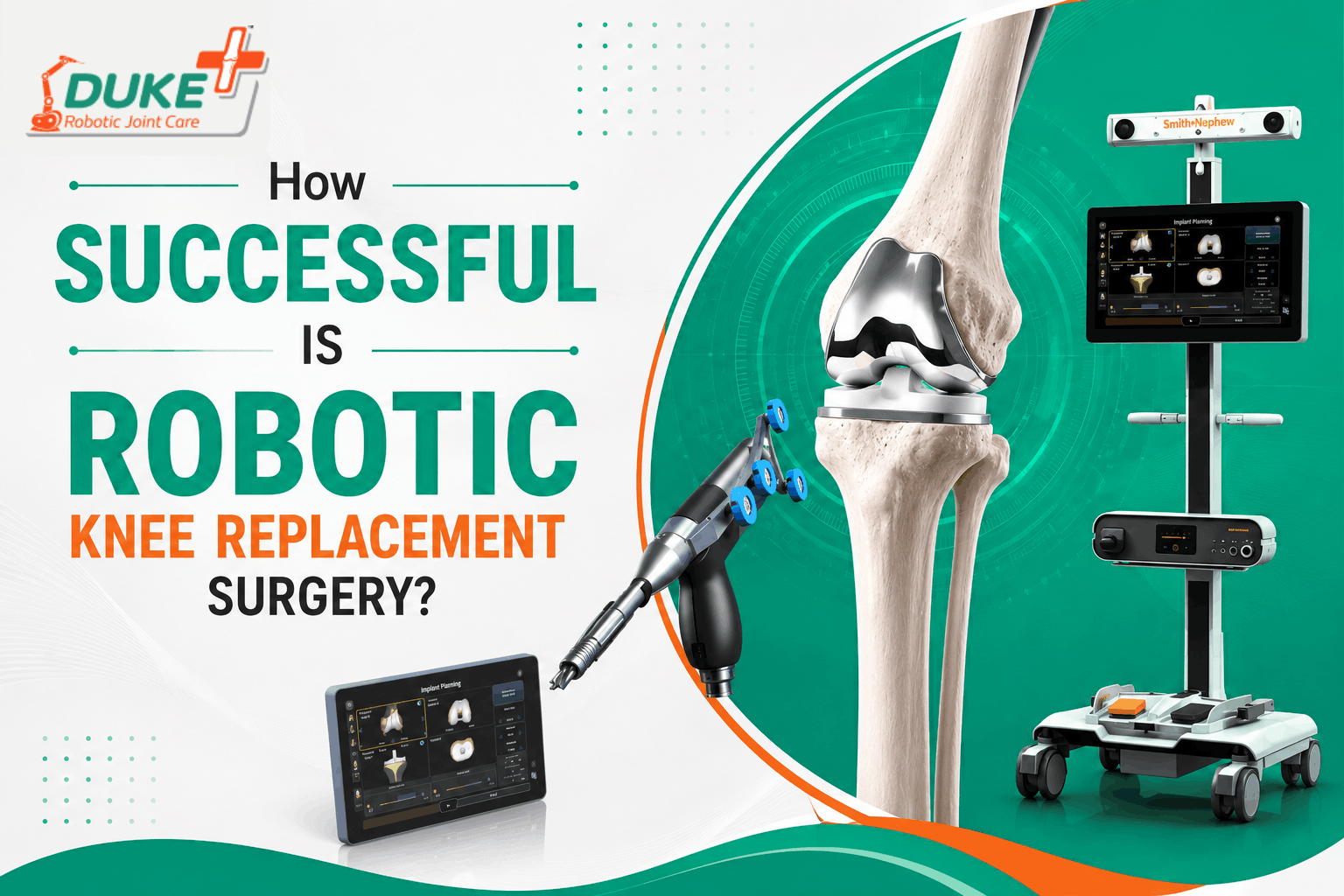
In recent years, robotic knee replacement surgery has gained widespread acceptance due to its high precision and patient-friendly outcomes. Many patients today also seek guidance from an experienced knee replacement surgeon in Gujarat to ensure the best possible results.
But one important question remains: How successful is robotic knee replacement surgery?
Understanding Robotic Knee Replacement
Robotic knee replacement is an advanced orthopaedic procedure where a robotic-assisted system helps the surgeon plan and perform surgery with exceptional accuracy. The robot does not perform the surgery independently; instead, it assists the surgeon using real-time data and detailed 3D mapping of the patient’s knee. This allows the procedure to be customized according to each patient’s unique anatomy rather than following a standard approach, making robotic knee replacement surgery more precise than conventional methods.
Success Rates of Robotic Knee Replacement
Clinical studies and real-world patient outcomes show that robotic knee replacement surgery has very high success rates, often exceeding 90–95%. Patients typically experience significant pain relief, improved mobility, and higher overall satisfaction compared to traditional knee replacement. Many also report better balance, smoother walking, and increased confidence during daily activities.
One of the key reasons behind this success is precise implant positioning. Even minor alignment errors in conventional surgery can affect knee movement and reduce implant lifespan. Robotic assistance ensures accurate placement, leading to better joint balance, natural motion, and long-lasting results.
Key Benefits of Robotic Knee Replacement
Greater surgical precision
Reduced damage to surrounding tissues
Less post-operative pain
Faster recovery and rehabilitation
Improved knee movement and stability
Longer implant durability
Patient Satisfaction and Quality of Life
Patient satisfaction is one of the strongest indicators of surgical success. Most individuals who undergo robotic knee replacement report noticeable improvement in daily activities such as walking, climbing stairs, and standing for longer durations. Reduced pain and improved mobility significantly enhance overall quality of life, allowing patients to regain independence and confidence.
Recovery and Long-Term Results
Recovery after robotic knee replacement surgery is usually smooth when guided by proper physiotherapy and post-operative care. While initial healing may take a few weeks, complete recovery generally occurs over a few months. With consistent rehabilitation and a healthy lifestyle, patients can enjoy the benefits of their knee replacement for 15–20 years or even longer.
Is Robotic Knee Replacement Right for Everyone?
Although highly successful, robotic knee replacement surgery may not be suitable for every patient. The decision depends on factors such as the severity of arthritis, bone condition, age, activity level, and overall health. Consulting an experienced knee replacement surgeon in Gujarat is essential to determine whether this advanced procedure is the right option.
Why Duke Robotic Hospital Is a Preferred Choice for Robotic Surgery
When it comes to advanced robotic joint replacement, Duke Robotic Hospital is recognised as a Best Robotic Knee Replacement Hospital for its commitment to precision, safety, and complete patient recovery. The hospital combines cutting-edge robotic technology with expert orthopaedic care to deliver consistently successful outcomes.
At Duke, the focus goes beyond surgery. Every patient receives personalised treatment planning, minimally invasive surgical techniques, and structured rehabilitation programs designed to restore mobility and improve long-term quality of life.
The Future of Robotic Joint Replacement Technology
Robotic joint replacement is shaping the future of orthopaedic care by making surgeries safer, smarter, and more precise. Advancements such as real-time intraoperative feedback, and expansion to joints beyond the knee and hip will further improve patient outcomes. As robotic technology becomes more accessible, more patients across India will benefit from advanced joint care.
Robotic knee replacement is commonly recommended for patients with advanced knee arthritis, severe cartilage damage, or long-standing knee pain that does not improve with medications, injections, or physiotherapy. It is especially helpful when knee alignment is affected.
Robotic knee replacement provides real-time feedback and controlled execution during surgery, while computer-assisted surgery mainly helps with planning and navigation. Robotic systems allow greater precision and consistency throughout the procedure.
Yes, many patients experience smoother and more natural walking after recovery. Accurate alignment and balanced soft tissues help improve stability, making walking, climbing stairs, and standing more comfortable.
Yes, when performed correctly and followed by proper rehabilitation, robotic knee replacements can last 15–20 years or more. Accurate implant placement helps reduce wear and improves long-term durability.
Precise implant positioning and better joint balance can lower the risk of early implant failure, potentially reducing the need for revision surgery in the future.
Conclusion
Robotic knee replacement surgery is one of the most successful advancements in modern orthopaedics. With high success rates, faster recovery, improved accuracy, and excellent patient satisfaction, it offers a reliable solution for individuals suffering from chronic knee pain. Choosing the Best Robotic Knee Replacement Hospital and consulting an experienced knee replacement surgeon can help ensure long-term knee health, mobility, and an improved quality of life.
Visit Us:
Duke Robotic Hospital
Gopal Arcade, Behind Circuit House,
Near Aroma Circle, Palanpur, Gujarat, India – 385001