
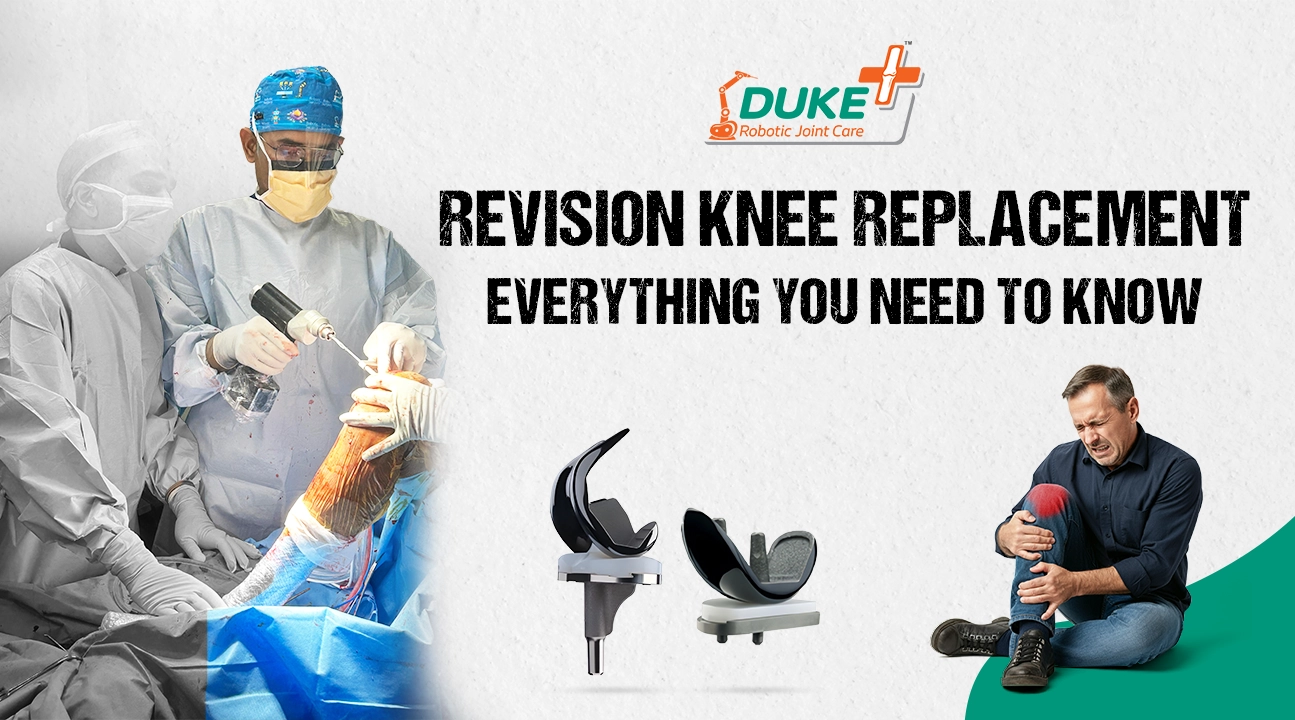
Sometimes, patients who have had a knee replacement or partial knee replacement done elsewhere may still experience pain, swelling, or difficulty walking. This could mean the implant has failed, wasn’t aligned properly, or didn’t heal as expected. In such cases, a second surgery, called revision knee replacement, may be needed to repair or fully replace the existing implant and restore proper knee function.
What is Revision Knee Replacement?
Revision knee replacement is a procedure done when your old knee implant stops working properly. It involves removing the failed implant and replacing it with a new one. This surgery is carefully planned and more specialised than the first (primary) knee replacement, but it can help you restore movement, reduce pain, and improve your ability to walk and move comfortably.
Why Is Revision Knee Replacement Needed?
You may need revision knee replacement surgery if your earlier knee implant is causing problems, such as:
In such cases, it’s important to consult a knee replacement surgeon who has experience in revision knee replacement, as timely treatment can prevent further damage and complications.
Warning Signs Your Knee May Need Revision Surgery
Here are some signs to watch for:
If you notice any of these signs, it’s important to get your knee implant evaluated early by an expert knee specialist to prevent further joint damage.
What to expect before and after a knee replacement?
Before the surgery:
After the surgery:
How Is Revision Knee Replacement Performed?
In this surgery, the doctor replaces the damaged or loose implant with a new implant. This may need special tools or bone grafts to ensure a strong fit. If there’s an infection in the knee joint, doctors usually follow a two-step process: first, they remove the old implant and place a temporary implant with antibiotics. Once the infection clears, a new implant is placed in the second surgery.
Since knee replacement and revision surgeries both require equal expert care, it’s important to choose a skilled knee replacement surgeon with experience in complex joint procedures.
Why Choose Knee Specialist Dr Bhupendra Patel for Revision Knee Replacement in Palanpur, Gujarat?
Dr Bhupendra Patel is a well-known name in advanced knee care, and he is the leading revision knee replacement surgeon in Palanpur. With years of experience and a reputation for successful outcomes, patients across Gujarat trust him for second-opinion cases and complex surgeries.
Here’s why patients choose Dr Bhupendra Patel for revision knee replacement surgery:
Dr Bhupendra Patel is one of the best surgeons for knee replacement surgery in Palanpur, known for his expertise, accurate diagnosis, and patient-focused care. He performs surgeries at Duke Robotic Hospital, which offers clean, well-equipped operation theatres and expert support teams.
FAQ’s
Final Thoughts
A failing knee implant can affect your comfort, mobility, and quality of life. If you’re facing ongoing pain or problems after a knee replacement surgery, it may be time to consider getting a revision knee replacement. This advanced surgery can help restore movement, reduce pain, and improve your daily life.
With the expertise of knee specialist Dr Bhupendra Patel and the advanced care at Duke Robotic Hospital, you’re in safe hands for a successful revision knee replacement surgery.