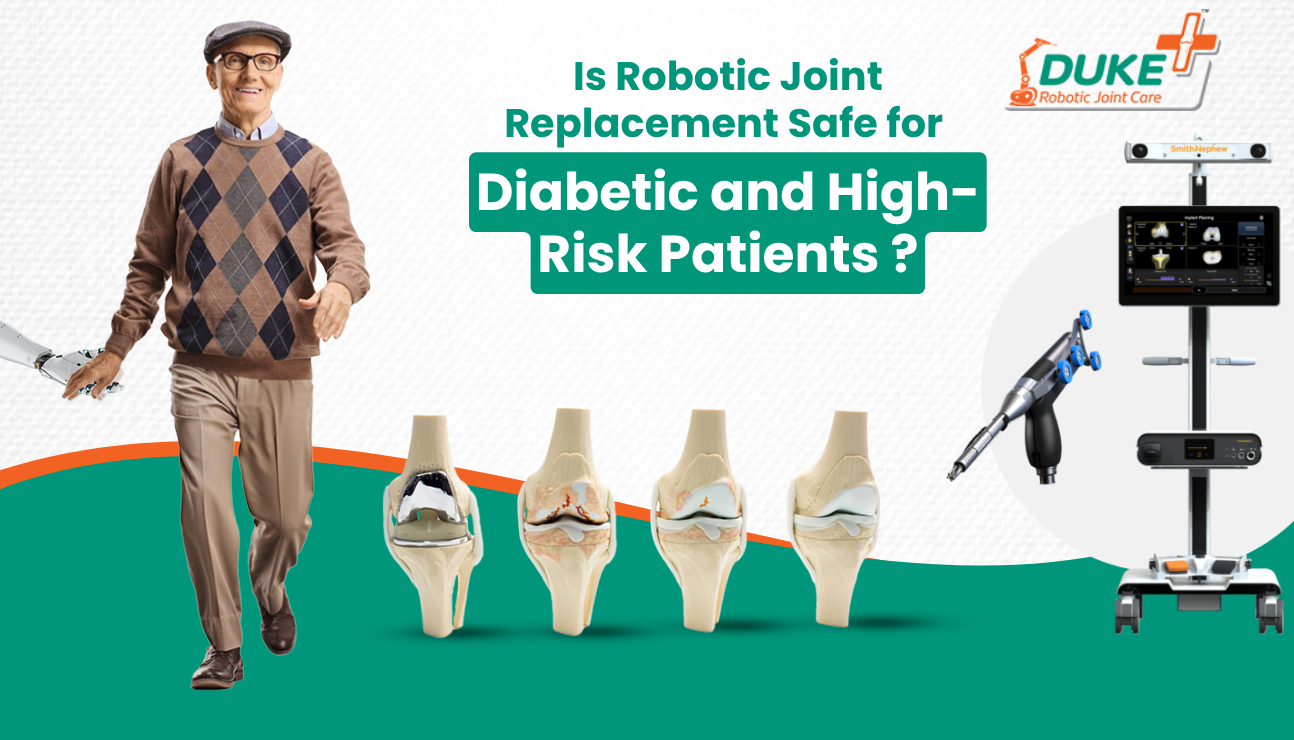
For patients who are diabetic or have health conditions such as high blood pressure, heart problems, or obesity, the thought of joint replacement surgery often brings fear. A common concern many patients share is, “Is surgery safe for someone like me?”
With advancements in medical technology, Robotic Joint Replacement has emerged as a safer and more precise solution—particularly for diabetic and high-risk patients—when performed with proper planning, expert care, and a specialized surgical team.
Why Diabetes and High-Risk Conditions Need Special Attention
Diabetes and other medical conditions can influence how the body responds to surgery. High blood sugar levels may slow wound healing and increase the risk of infection, while heart conditions or high blood pressure require careful monitoring during anesthesia and recovery.
Being diabetic or high-risk does not mean joint replacement is unsafe. It simply means the procedure must be carefully planned and precisely executed—this is where robotic joint replacement technology plays a vital role.
What Is Robotic Joint Replacement?
Robotic joint replacement is a modern surgical technique where advanced robotic systems assist the surgeon in planning and performing the procedure with exceptional accuracy. It allows the surgeon to customize the surgery according to the patient’s unique joint structure.
Before surgery, detailed scans help create a personalized surgical plan. During the procedure, the robotic system guides implant placement with high precision while protecting surrounding tissues—an important advantage for diabetic and high-risk patients.
How Robotic Surgery Improves Safety for Diabetic Patients
Robotic-assisted joint replacement surgery offers several benefits that enhance safety:
Smaller, controlled incisions with minimal tissue damage
Reduced blood loss during surgery
Lower risk of infection due to precise surgical handling
Accurate implant alignment for better long-term results
Faster recovery and early movement, reducing complications
Recovery and Healing After Surgery
Recovery is especially important for diabetic patients. Robotic joint replacement often enables patients to start walking within a short time after surgery. With controlled pain, shorter hospital stays, and guided physiotherapy, patients regain mobility safely and confidently.
Regular blood sugar monitoring, proper wound care, and scheduled follow-ups further support smooth healing and reduce complications.
A Real Patient Experience
Mr. Shivkumar Dubey suffered from severe knee pain and delayed surgery due to fear caused by his heart condition. After consulting Dr. Bhupendra Patel, the best robotic joint replacement surgeon, at Duke Robotic Hospital, Palanpur, he learned that robotic knee replacement is a safe and effective option even for high-risk patients. With minimal blood loss, less pain, and faster recovery, he began walking the very next day and is now living a pain-free, confident life.
Watch his full recovery journey in the video below:
In many cases, early diagnosis and treatment can slow joint damage and delay advanced procedures.
Final Thoughts
Robotic Joint Replacement has made joint surgery safer and more predictable for diabetic and high-risk patients. While no surgery is completely risk-free, advanced technology, careful medical planning, and experienced surgeons like Dr. Bhupendra Patel significantly reduce complications.
If joint pain is affecting your quality of life, don’t let fear hold you back. With the right evaluation and expert care, you can move comfortably again—safely and confidently.
Visit Us:
Duke Robotic Hospital
Gopal Arcade, Behind Circuit House,
Near Aroma Circle, Palanpur, Gujarat, India – 385001