
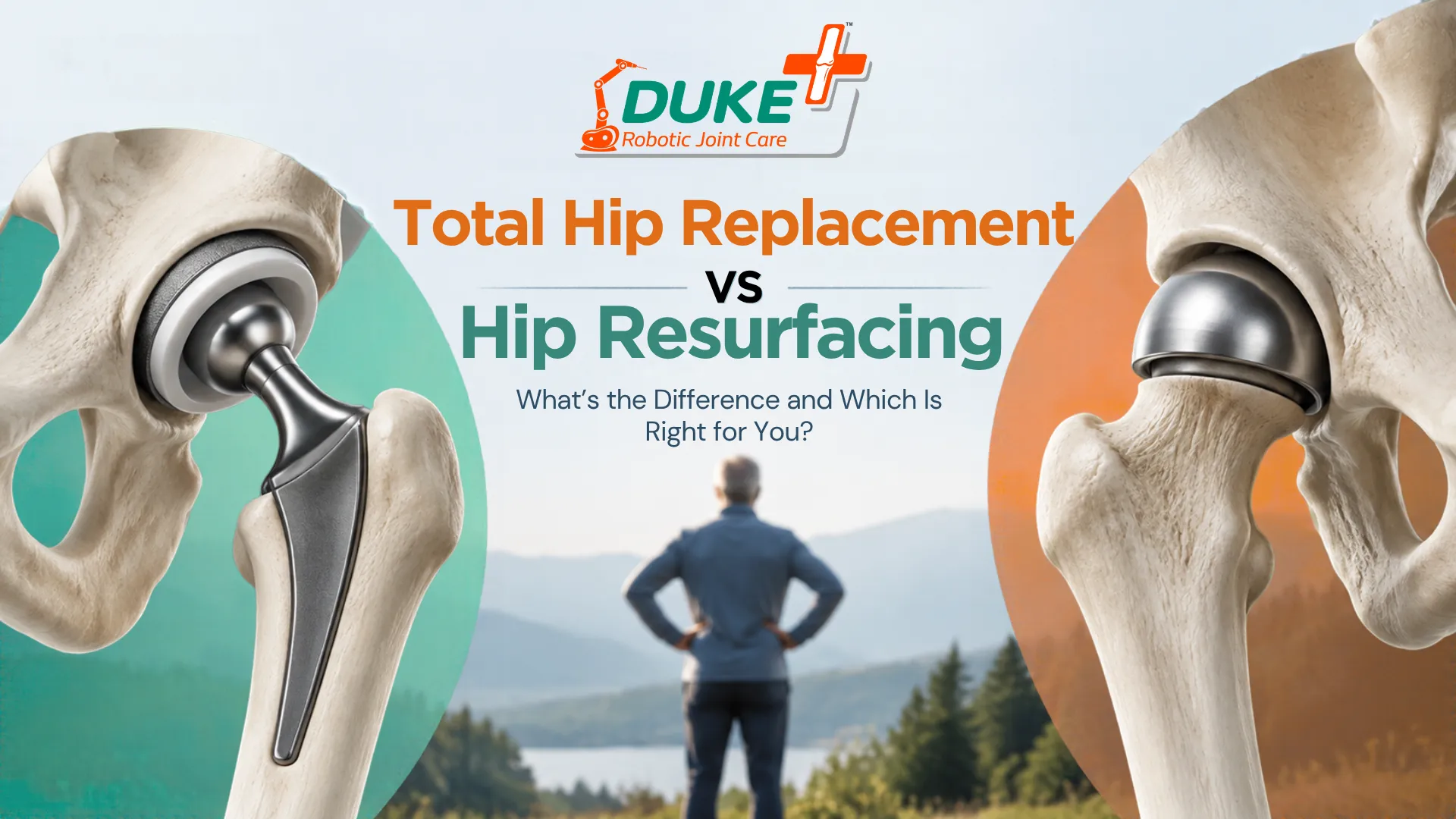
When hip pain makes walking, sitting, or performing everyday activities difficult, surgery may become a treatment option for some patients. Depending on the extent of hip joint damage, doctors may consider surgical options such as total hip replacement or hip resurfacing.
The main difference is that total hip replacement replaces the damaged ball and socket of the hip joint, while hip resurfacing preserves most of the natural thigh bone and covers its reshaped head with a metal cap.
For patients considering Hip Replacement Surgery in Gujarat, understanding these procedures can help them make an informed decision with their doctor.
Key Differences Between Total Hip Replacement and Hip Resurfacing
Both procedures aim to reduce pain and improve movement in a damaged hip joint. However, they differ in how the joint is reconstructed and how much natural bone is retained.
The following table explains the key differences between these two surgical procedures.
| Factor | Total Hip Replacement | Hip Resurfacing |
| Surgical approach | Replaces the damaged ball and socket with artificial implant | Reshapes the natural ball, covers it with a metal cap, and replaces the socket surface |
| Bone preservation | Removes the ball-shaped upper end of the thigh bone | Preserves most of the natural bone by reshaping its upper surface |
| Implant material | May include metal, ceramic, and medical-grade plastic | Typically uses metal-on-metal implant |
| Patient suitability | Suitable for a wider range of patients | Suitable for selected patients with good bone quality |
| Recovery | Varies according to individual health and rehabilitation | Varies according to individual health and rehabilitation |
Who May Be Suitable for Each Procedure?
Total hip replacement may be considered for patients with:
- Advanced hip arthritis
- Severe hip joint damage
- Persistent pain despite non-surgical treatment
- Certain conditions affecting bone quality or the blood supply to the hip
Hip resurfacing may be considered for:
- Selected younger, physically active patients
- Patients with good bone quality
- Patients with suitable hip anatomy
A detailed medical examination and imaging tests help guide the decision.
Recovery: What to Expect
Both procedures require proper post-surgery care and rehabilitation.
Recovery generally involves:
- Walking with support as advised
- Physiotherapy to improve strength and movement
- Proper wound care
- Regular follow-up appointments
- Gradual return to everyday activities
Recovery time varies from patient to patient. Neither procedure guarantees a faster recovery.
Hip Replacement at Duke Robotic Hospital, Gujarat
At Duke Robotic Hospital in Palanpur, Dr. Bhupendra Patel assesses patients with hip joint problems, taking into account the extent of joint damage, bone quality, and difficulties faced during everyday activities before recommending treatment.
The hospital uses the NDT (No Dislocation Technique) for hip replacement in suitable patients. This surgical approach focuses on preserving surrounding soft tissues and maintaining hip joint stability.
For patients considering Hip Replacement Surgery in Gujarat, the hospital provides hip joint assessment, treatment planning, hip replacement surgery, and in-house physiotherapy support.
Frequently Asked Questions
Final Thoughts
Both total hip replacement and hip resurfacing have specific benefits, limitations, and risks. Choosing the appropriate procedure requires an understanding of your hip condition, bone health, and lifestyle.
A consultation with an orthopaedic specialist can help determine which treatment option may be suitable for you.