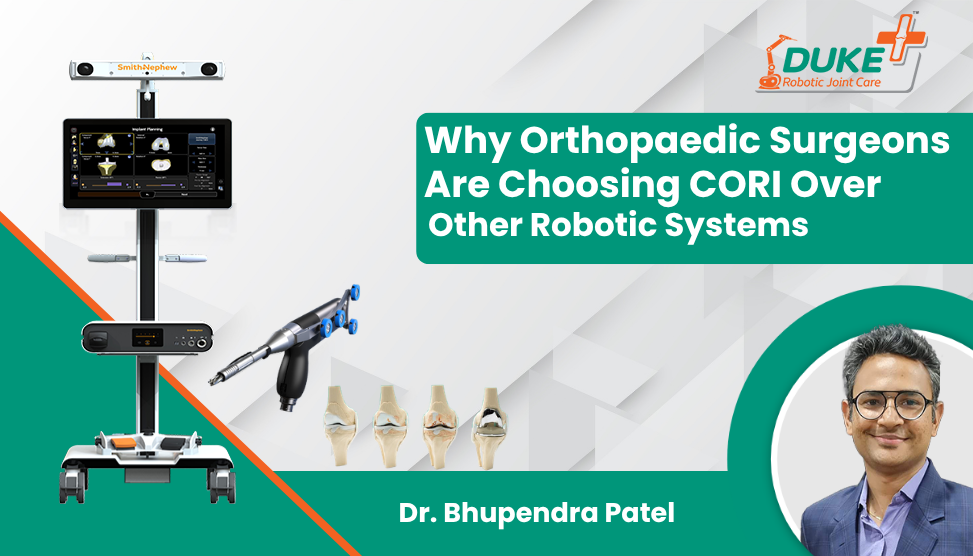
Orthopaedic surgery is entering a new era, and CORI robotic knee replacement is leading the way with unmatched precision and faster recovery. As the demand for precision and faster recovery grows, more surgeons are turning to advanced robotic systems. Among the many options available, the CORI robotic knee replacement system is quickly becoming the preferred choice. But what makes it stand out?
Let’s explore why orthopaedic specialists are increasingly choosing the CORI robotic system over other robotic platforms.
What Is the CORI Robotic System?
The CORI robotic system is a next-generation robotic-assisted surgical platform specifically designed for knee replacement procedures. It is used in both total and partial knee replacements and offers surgeons real-time data, 3D mapping, and advanced guidance during surgery.
Unlike some older robotic platforms that rely heavily on preoperative CT scans, the CORI system eliminates the need for such imaging. Instead, it builds a 3D model of the patient’s knee during surgery itself. This allows the surgeon to adapt the surgical plan in real time, ensuring higher precision and better joint alignment.
How Is CORI Different From Other Robotic Systems?
The CORI robotic system stands out due to:
No need for CT scans: CORI uses smart mapping directly during the procedure, which reduces radiation exposure and speeds up the preparation process.
Compact design: CORI is mobile and can be easily integrated into various operating room settings.
Real-time adjustments: Surgeons can make modifications on the go, allowing greater flexibility and personalized treatment.
This system is particularly effective in procedures like robotic partial knee replacement, robotic knee microplasty, and robotic total knee replacement, making it a versatile tool for modern joint care.
Precision, Accuracy, and Real-Time Flexibility
One of the biggest advantages of the CORI robotic-assisted joint replacement system is its real-time intraoperative flexibility. The surgeon receives constant feedback on soft tissue balance, implant placement, and bone preparation.
This level of accuracy in robotic knee replacement surgery reduces the risk of implant misalignment, a common cause of pain or revision surgeries. It also helps in preserving healthy bones and ligaments, which leads to faster healing and more natural movement post-surgery.
Improved Patient Outcomes
Because the CORI system allows for highly personalized surgical adjustments, patients tend to recover with less discomfort and return to their routine activities more confidently.
Less postoperative pain
Reduced hospital stays
Faster return to daily activities
Greater satisfaction with the feel and function of their new joint
Whether it’s a robotic full knee replacement or a robotic partial knee replacement, the outcomes with CORI are consistently superior compared to other robotic systems.
At centres like Duke Robotic Hospital in Palanpur, which specialise in robotic joint replacement, patients have reported excellent results with CORI’s precision and faster recovery timelines.
Better Workflow for Surgeons
From a surgeon’s perspective, the CORI system is designed for ease and efficiency. It streamlines the surgical workflow by reducing dependency on pre-op imaging and allows surgeons to make data-backed decisions in real time.
Surgeons using CORI report more confidence in achieving ideal implant positioning and balance, which is crucial for long-term joint function.
Future-Proofing Orthopaedic Surgery
With advancements in robotic orthopaedic surgery, it’s clear that robotic-assisted techniques are not just a trend; they’re the future. The CORI system is regularly updated with new features and software improvements, ensuring it evolves with changing medical standards and surgeon feedback.
For hospitals and clinics looking to invest in long-term technology, CORI is a future-ready solution that promises continued innovation.
Final Thoughts: The Right System for the Right Outcome
In the evolving landscape of robotic surgery for knee replacement, the CORI system has earned its place as a top-tier option. Its ability to deliver personalized, precise care, without the complications of bulky systems or unnecessary pre-op scans, makes it the go-to choice for many top orthopaedic surgeons in India and beyond.
If you’re a patient exploring robotic knee replacement surgery, Duke Robotic Hospital in Palanpur stands out as one of the premier institutions offering CORI robotic knee replacement in Gujarat, combining expert care with cutting-edge technology.
CORI robotic-assisted knee surgery uses real-time data and 3D mapping for precise implant positioning, whereas traditional surgery relies more on visual judgement and manual alignment.
In many cases, yes. Because the surgery is more accurate and less invasive, patients often report quicker pain relief, less swelling, and a faster return to daily activities.
The surgery typically takes 1 to 2 hours, depending on the complexity and whether it’s a partial or full replacement.
Considering robotic knee replacement surgery? Ask your orthopaedic surgeon if CORI is right for you, or visit Duke Robotic Hospital in Palanpur to learn more.
Visit Us:
Duke Robotic Hospital
Gopal Arcade, Behind Circuit House,
Near Aroma Circle, Palanpur, Gujarat, India – 385001