
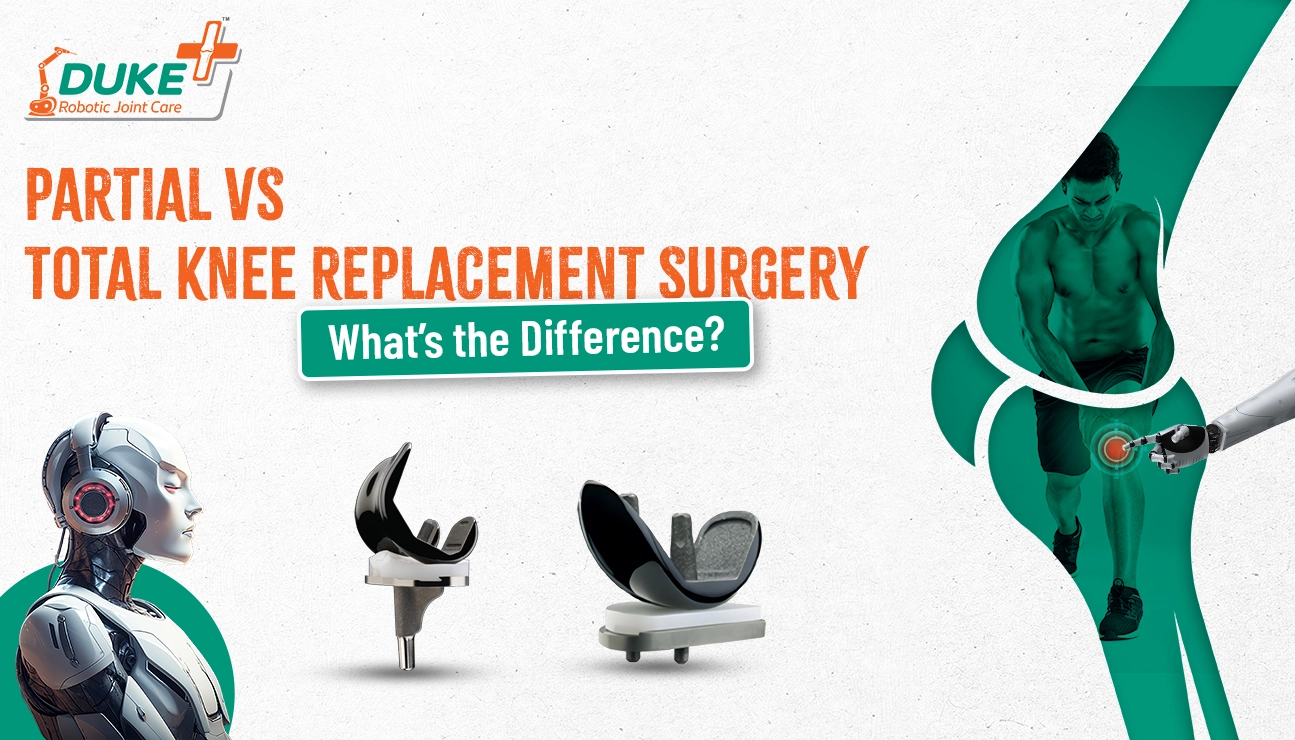
Introduction: Understanding Your Knee Pain
Knee pain is not just about discomfort—it can slowly change the way you live your life. Older people often face knee and joint problems as a part of aging. Some have pain because of arthritis, while others may feel it after an old injury. At first, medicines and exercises may help, but when the pain keeps coming back, it becomes harder to manage. That’s when doctors may suggest knee replacement surgery as the best option for long-lasting relief.
But which surgery is right for you?
Many patients ask us:
“Do I need a partial knee replacement or a total knee replacement?”
Let’s answer this question in detail, so you can understand your options and make the best choice for your health.
What is Knee Replacement Surgery?
Knee replacement surgery is a procedure where the damaged parts of the knee joint are removed and replaced with artificial parts, called implants. These implants function like your natural joint, allowing you to move without pain.
There are two main types of knee replacement:
What is Partial Knee Replacement?
Partial knee replacement (also called unicompartmental knee replacement) is done when only one part of your knee is affected by arthritis or injury.
- 1Medial – inner part of the knee
- 2Lateral – outer part
- 3Patellofemoral – front of the knee (under the kneecap)
If only one of these is affected, partial knee replacement may be all you need.
Key Benefits of Partial Knee Replacement:
Best for:
At Duke Robotic Hospital, we use robotic precision to perform partial knee replacements, which improves accuracy and reduces complications.
What is Total Knee Replacement?
Total knee replacement is required when all three compartments of the knee are damaged, typically due to advanced osteoarthritis, injury, or wear-and-tear.
In this surgery, the entire knee joint is replaced with strong, artificial parts that help you walk and move easily.
Key Benefits of Total Knee Replacement:
Best for:
At Duke Robotic Hospital, Dr. Bhupendra Patel uses advanced CORI robotic systems for total knee replacements to ensure the highest level of safety and success.
Comparison Table: Partial vs Total Knee Replacement
| Feature | Partial Knee Replacement | Total Knee Replacement |
|---|---|---|
| Part Replaced | One section of the knee | Whole knee joint |
| Surgery Type | Less invasive | More invasive |
| Recovery Time | 3–6 weeks | 6–12 weeks |
| Hospital Stay | 1–2 days | 3–5 days |
| Pain After Surgery | Usually less | Slightly more at first |
| Best For | Early-stage arthritis | Advanced arthritis |
Where to Get Knee Replacement Surgery in Palanpur?
If you’re looking for trusted and advanced knee replacement surgery in Palanpur, Duke Robotic Hospital is the top choice for patients across North Gujarat.
Why Choose Duke Robotic Hospital?
Duke Robotic Hospital is North Gujarat’s first robotic joint replacement center, led by Dr. Bhupendra Patel – best robotic joint replacement surgeon in the region.
Here’s what we offer:
We don’t believe in one-size-fits-all. Every patient receives a customized surgical plan based on their joint condition, age, and lifestyle.
Knee Replacement Surgery in Palanpur – Duke Robotic Hospital
Choosing the right surgery depends on many factors. At Duke Robotic Hospital, we assess:
Our advanced 3D imaging tools help Dr. Patel make the best possible recommendation for your long-term knee health.
Final Thoughts: Make the Right Choice for Your Knees
Both partial and total knee replacement surgeries can:
But the best outcomes happen when the right surgery is chosen for your specific condition — and performed by an experienced surgeon using advanced technology.
That’s what we offer at Duke Robotic Hospital, Palanpur. With a commitment to patient safety, precision, and fast recovery, we are proud to lead the way in robotic knee surgery in Gujarat.